
Introduction
Regulatory review over waste management practices has intensified considerably across industries. Environmental agencies are conducting inspections more frequently, expanding documentation requirements, and imposing penalties that carry significant financial and reputational consequences for non-compliant organizations. The volume and diversity of waste streams that businesses must manage continue to grow, driven by expanding operations, evolving product lines, and increasingly complex supply chains.
Organizations that depend on manual, paper-based waste management processes are carrying compliance risks that modern regulatory environments no longer tolerate. Structured waste management software has emerged as the operational backbone of high-performing EHS programs not simply as a digital replacement for paper forms, but as a comprehensive compliance infrastructure that governs how waste is classified, tracked, approved, disposed, and reported.
Understanding Waste Management Compliance
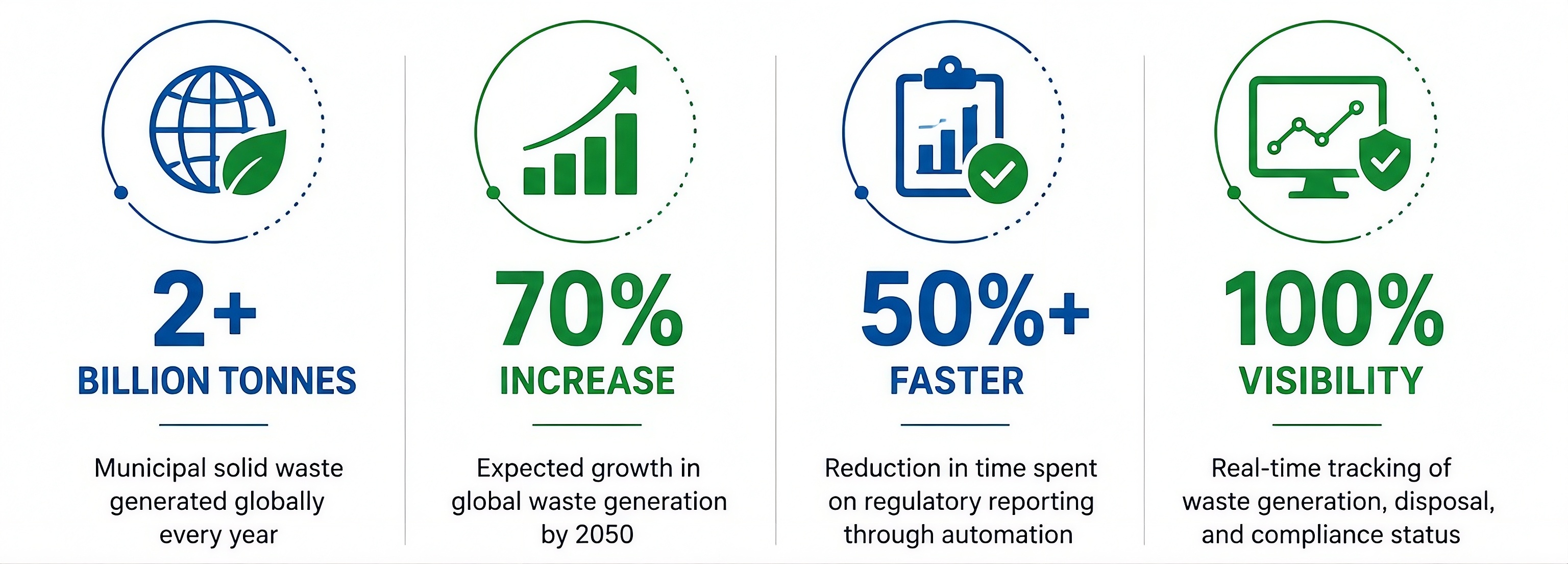
Waste management compliance is not a single regulatory obligation. It is a layered framework that encompasses federal environmental statutes, state-level regulations, industry-specific standards, and internal governance requirements all operating simultaneously across every facility where waste is generated.
Organizations operating in regulated industries must correctly classify waste at the point of generation, maintain accurate records of waste volumes, compositions, and storage durations, track transportation through licensed and authorized haulers, and retain disposal certificates and manifests from permitted treatment and disposal facilities. For hazardous waste management, the obligations are particularly stringent. Government-mandated forms must be accurately completed, submitted to environmental authorities within prescribed timeframes, and archived for retention periods that commonly extend five years or more.
Industry-specific compliance expectations compound these baseline obligations. Pharmaceutical manufacturers face different requirements than heavy metal processors. Healthcare facilities managing biomedical waste must satisfy both environmental and public health standards. Chemical manufacturers dealing with chemical waste streams carry separate disclosure and emergency response obligations. Organizations operating across multiple sectors may navigate several of these frameworks simultaneously.
What all of these contexts share is a foundational requirement: accurate, traceable, time-stamped documentation that demonstrates compliance at every stage of the waste lifecycle. Without that documentation, an otherwise compliant organization cannot prove its compliance.
Manual vs Digital Waste Management
Area | Impact | Manual Waste Management | Digital Waste Management |
Record Keeping | Compliance Gaps | Paper-based records | Centralized digital records |
Data Entry | Errors & Inconsistency | Manual data entry | Structured digital forms |
Document Storage | Slow Retrieval | Files in multiple locations | Instant document retrieval |
Approvals | Delays | Email and verbal approvals | Automated workflows |
Audit Trail | Poor Traceability | Missing or incomplete records | Complete audit trail |
Waste Disposal | Processing Delays | Manual approvals | Faster processing and approvals |
Visibility | Limited Oversight | Limited visibility | Real-time tracking |
Audits | Preparation Burden | Time-consuming audit preparation | Audit-ready documentation |
Reporting | Compliance Risks | Manual reporting | Automated reports and analytics |
Vendor Management | Coordination Issues | Manual vendor coordination | Integrated vendor verification |
What Is Waste Management Software?
Waste management software is a purpose-built digital platform that governs the complete lifecycle of organizational waste from initial generation and classification through collection, vendor coordination, disposal verification, regulatory documentation, and compliance reporting. Unlike generic document management systems or repurposed spreadsheet frameworks, a dedicated waste management system is designed specifically around the regulatory and operational requirements of EHS compliance programs.
What distinguishes modern environmental management software from basic record-keeping tools is its end-to-end workflow capability. The platform connects waste-generating departments, authorized disposal vendors, EHS oversight personnel, and regulatory reporting functions within a single traceable system. Every action request submission, approval, vendor confirmation, compliance review is logged, timestamped, and attributed to the responsible user or department.
A well-designed waste disposal management system is highly configurable, allowing organizations to define their own waste categories and disposal requirements, structure workflows to match their internal approval hierarchies, integrate government-mandated forms for hazardous waste disposal, and adapt the system as their operational footprint or regulatory environment changes.
The breadth of configurable waste categories is significant. A comprehensive industrial waste management software platform can accommodate hazardous waste, non-hazardous industrial waste, biomedical waste, chemical waste, recyclable materials, and any additional waste streams the organization defines based on its specific processes. This configurability is what allows the same underlying platform to support compliance across vastly different industries and regulatory contexts.
How Waste Management Software Works
Waste Management
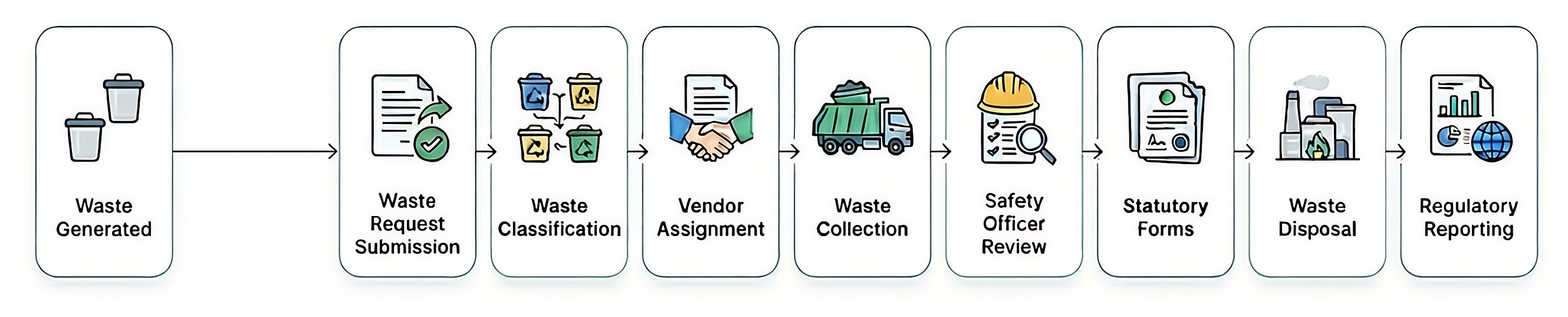
The compliance value of waste management software is best understood through the operational workflow it governs. Every stage of the process is designed to address a specific weakness commonly found in manual waste management programs, from waste identification and storage to disposal, reporting, and regulatory compliance.
Waste Categorization
Waste categories are defined and linked to their respective disposal requirements, regulatory obligations, retention periods, approval authorities, and documentation requirements. Departments, waste streams, transporters, and authorized disposal vendors are mapped within the platform.
This configuration transforms compliance requirements from static policy documents into system-enforced workflows. Rather than relying on individual knowledge, the software ensures that each waste type follows the correct handling and disposal process.
For industries such as aerospace, where multiple waste streams exist simultaneously, this capability becomes particularly important. Hazardous chemicals, paint waste, solvents, batteries, contaminated absorbents, chemical containers, recyclable materials, and general industrial waste each carry different storage, transportation, and disposal requirements. The system differentiates between these waste categories from the outset and applies the appropriate controls automatically.
Waste Disposal Workflow
When waste is generated, the responsible department head or waste coordinator initiates a disposal request through a structured digital form. The request captures essential information including waste classification, quantity, source department, disposal method, transporter details, photographs, waste characterization reports, and supporting documentation.
Once submitted, the request is automatically routed to the appropriate approved vendor based on waste type and predefined business rules. The vendor confirms collection and disposal activities directly within the system, creating a complete digital chain of custody with time-stamped records for every stage of the process.
Following vendor confirmation, the request moves to the Safety Officer or EHS Manager for final verification and closure, ensuring that every disposal activity undergoes compliance review before completion.
Automated Disposal Tracking and Escalation
One of the most valuable capabilities of waste management software is the automated monitoring of disposal deadlines and regulatory storage limits.
Different waste categories often have different maximum onsite storage periods. Managing these requirements manually through spreadsheets, emails, or calendar reminders creates a significant risk of non-compliance.
The software continuously monitors disposal due dates and retention requirements. If a waste disposal activity remains incomplete, automated reminders are sent to the responsible personnel. As deadlines approach, alerts are escalated to department heads. If the waste remains unresolved beyond defined thresholds, escalation workflows automatically notify EHS managers and senior stakeholders.
This structured escalation process ensures that overdue waste does not remain unnoticed and helps prevent waste from exceeding permitted storage durations.
SDS Integration for Hazardous Waste Management
Managing hazardous waste requires immediate access to accurate hazard information. A well-designed waste management platform integrates Safety Data Sheets (SDS) directly into the disposal workflow.
Each hazardous waste stream can be linked to its corresponding SDS, providing employees, contractors, transporters, and disposal vendors with instant access to critical safety information throughout the handling process.
This supports:
- Proper PPE selection
- Correct storage and segregation practices
- Safe transportation procedures
- Effective spill response
- Emergency preparedness
In the event of a spill, exposure incident, or transportation emergency, responders can immediately access hazard information through the system rather than searching through physical SDS binders, reducing response time and improving decision-making during critical situations.
Regulatory Reporting and Compliance Management
Regulatory reporting remains one of the most resource-intensive aspects of waste management. Collecting data from multiple departments, compiling records, and preparing submissions manually often consumes significant administrative effort.
Waste management software simplifies this process by automatically capturing waste generation, storage, transportation, and disposal records throughout the workflow. Since information is collected at the point of activity, reporting becomes a by-product of daily operations rather than a separate administrative task.
Required statutory forms, manifests, annual waste summaries, compliance reports, and regulatory submissions can be generated directly from the system. Digital recordkeeping also improves audit readiness by maintaining a centralized repository of historical waste data that remains readily accessible during inspections and compliance reviews.
Dashboards and Waste Analytics
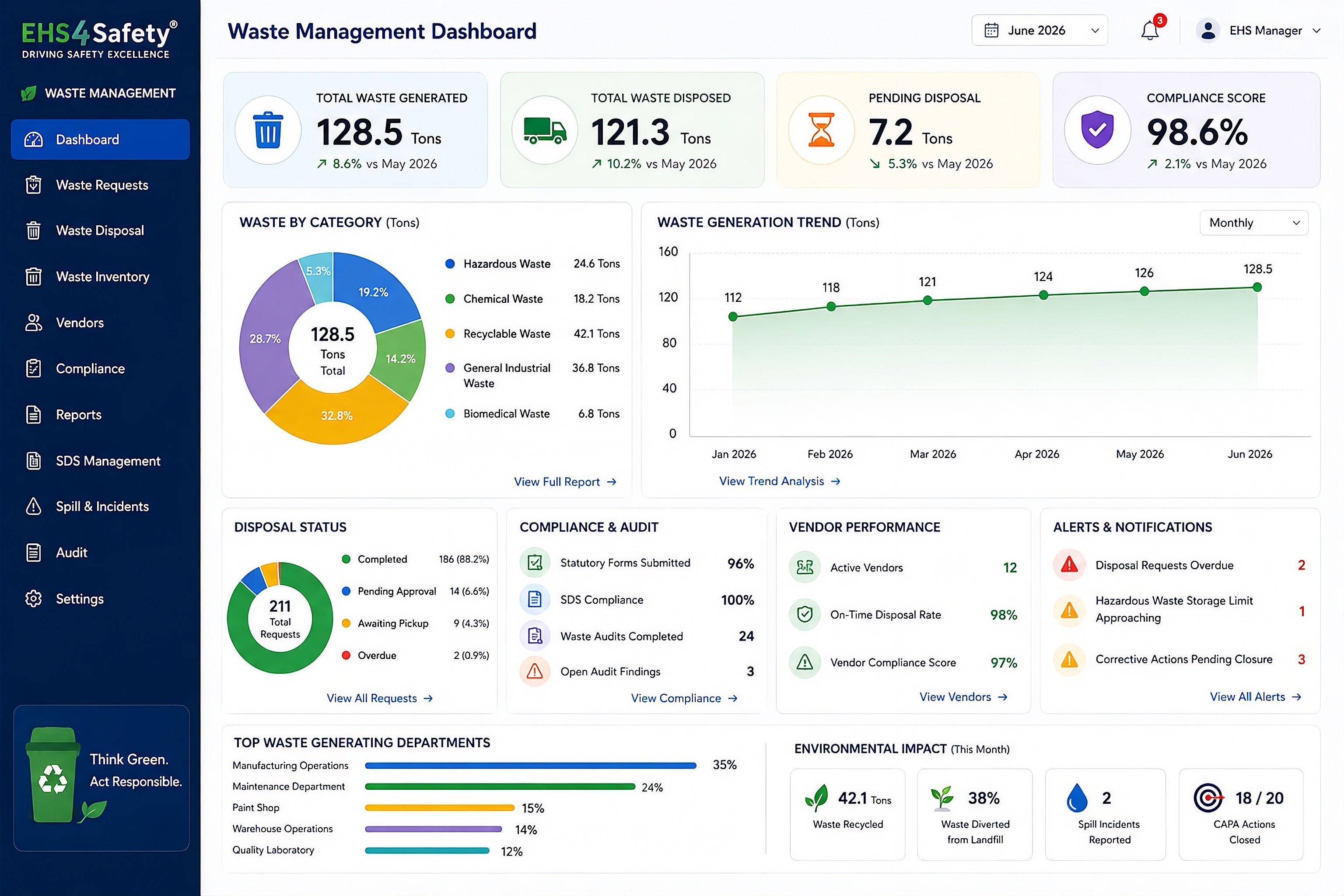
Real-time dashboards provide continuous visibility into waste management performance across the organization.
EHS teams can monitor waste generation and disposal activities through a centralized dashboard displaying:
- Waste quantities by category
- Disposal status of active requests
- Department-wise waste generation
- Overdue disposal activities
- Vendor performance metrics
- Regulatory compliance status
This visibility enables safety managers to identify unusual waste generation patterns, recognize potential compliance risks, evaluate disposal efficiency, and make informed operational decisions before issues escalate.
Reporting and Performance Analysis
Comprehensive reporting capabilities allow organizations to analyze waste management performance over time.
Monthly, quarterly, and annual reports can be generated to evaluate waste generation trends by category, department, facility, vendor, and disposal method. These reports provide valuable insights into waste reduction initiatives, sustainability programs, and environmental performance objectives.
Historical trend analysis helps organizations identify opportunities to reduce waste at the source, improve disposal efficiency, optimize vendor performance, and strengthen overall environmental compliance. By converting operational data into actionable insights, waste management software supports both regulatory compliance and continuous improvement objectives.
Benefits of Using Waste Management Software
1. Improved Regulatory Compliance
The most fundamental compliance benefit of waste compliance software is the structural embedding of regulatory requirements into daily operations. Mandatory form fields, required document attachments, regulated approval sequences, and statutory reporting integrations make it operationally difficult for staff to skip required steps or submit incomplete records. Compliance becomes an inherent property of the workflow rather than a separate activity that depends on individual knowledge and attention.
2. Centralized Documentation Management
Waste documentation software consolidates all records like disposal requests, vendor confirmations, statutory forms, inspection findings, incident reports, and corrective actions into a single, organized,and searchable repository. When regulatory authorities request multi-year disposal records for a specific waste stream or waste category, the EHS team can retrieve and produce complete documentation sets within minutes. The alternative searching through physical binders, shared drives, and departmental email archives carries obvious risks during time-sensitive regulatory interactions.
3. Better Hazardous Waste Tracking
Hazardous waste tracking carries the highest compliance risk of any waste management function. Regulatory violations involving hazardous materials can trigger criminal liability in addition to civil penalties. Dedicated hazardous waste management software establishes an unbroken chain of custody from generation through final disposal, with every stage documented, verified, and attributable to specific personnel. This level of traceability is structurally unachievable through paper-based or spreadsheet-based waste tracking approaches.
4. Enhanced Audit Readiness
Organizations using waste audit software maintain audit-ready documentation as a standard byproduct of normal operations rather than as a reactive preparation exercise. When regulatory inspectors arrive, EHS teams can immediately present current disposal records, historical waste volumes, vendor verification logs, outstanding corrective actions, and completed audit trails organized, accessible, and complete. The transition from reactive to perpetual audit readiness is one of the most operationally significant changes that digital waste management enables.
5. Automated Workflow Management
Manual routing of waste disposal approvals introduces delay and accountability gaps at every handoff point. Industrial waste management software automates routing based on configurable rules, waste classification, generating department, disposal volume, or regulatory category ensuring requests move through the required approval sequence without manual coordination. Every routing decision, approval action, and escalation is logged automatically.
6. Increased Department Accountability
When all waste disposal requests are submitted through individual named accounts within the waste management system, departmental accountability becomes an inherent property of every transaction. The system records who submitted each request, who approved it, and when each action was taken. This visibility improves compliance behavior and creates organizational awareness of waste generation patterns that supports both compliance management and sustainability program development.
7. Improved Vendor Coordination
Waste disposal tracking depends critically on reliable confirmation from disposal vendors. When vendor coordination occurs through informal channels, confirmation gaps frequently arise when the vendor completes a pickup, but the organization holds no verified record. Integrated vendor participation in the waste management system closes this gap by requiring authorized vendors to log completion directly within the platform. Waste collection management records are then complete, verifiable, and available for regulatory review without manual follow-up.
8. Faster Regulatory Reporting
Waste reporting software dramatically accelerates the preparation of regulatory submissions. Waste volume data, disposal records, transporter information, statutory forms, and vendor confirmation logs all captured during routine operations can be aggregated and formatted for submission with minimal manual effort. Annual environmental reports, permit compliance submissions, and agency-specific disclosures that previously required weeks of EHS staff time can be produced in substantially shorter timeframes with higher data accuracy.
9. Better Spill and Incident Management
Environmental spills and waste-related incidents trigger immediate documentation and notification obligations under many regulatory frameworks. Waste monitoring software with integrated spill reporting capabilities enables EHS teams to initiate incident records immediately capturing affected materials, estimated volumes, location, initial containment actions, and involved personnel and maintain a continuously updated record throughout the investigation and remediation process. Root cause findings, regulatory notifications, and corrective action commitments are documented within the same traceable thread, creating a complete and defensible incident record.
10. Real-Time Visibility Into Waste Activities
Environmental compliance software provides EHS leadership with continuous operational visibility pending disposal requests, outstanding vendor confirmations, approaching storage deadlines, overdue corrective actions, and waste volume trends rather than the periodic snapshots that manual reporting produces. This real-time visibility shifts waste management oversight from a reactive to a proactive posture, enabling EHS teams to address emerging compliance risks before they become violations.
11. Stronger Sustainability Performance
Organizations with mature digital waste management programs consistently demonstrate measurable improvements in sustainability metrics. Comprehensive waste disposal tracking provides the credible data foundation required for lifecycle assessments, carbon accounting, circular economy reporting, and ESG disclosures. Sustainability commitments supported by verifiable waste data carry substantially more credibility with regulators, investors, and stakeholders than those supported by estimates or manually compiled figures.
The Role of Waste Audits
Waste audits serve two operationally distinct functions: internal verification and external inspection readiness. Internal audits conducted by EHS staff or qualified third-party consultants examine waste classification accuracy, vendor authorization status, documentation completeness, and adherence to internal waste management procedures. Their principal value is identifying compliance gaps before regulators do.
Waste audit software supports these reviews through configurable forms structured around specific regulatory requirements, permit conditions, or internal standards. Findings are recorded within the system, linked to relevant disposal records or waste streams, and tracked through corrective action workflows until resolution is documented. When regulatory inspectors conduct their own reviews, the organization can demonstrate not only that disposal activities were compliant, but that compliance is actively monitored and continuously improved.
Spill Reporting and Environmental Incident Tracking
Waste-related spill events and environmental incidents impose some of the most time-compressed compliance obligations in the regulatory framework. Notification requirements to environmental authorities often apply within hours of occurrence, followed by formal incident reports, root cause analyses, and corrective action plans within regulated timeframes.
Waste management software with built-in spill reporting capabilities enables EHS teams to initiate incident records immediately capturing affected materials, volumes, location, initial containment actions, and involved personnel and maintain a continuously updated record throughout the investigation and remediation process. Root cause findings, regulatory notifications, and corrective commitments are documented within the same traceable thread, creating a complete and defensible incident record.
Incident pattern analysis is an equally critical function. When recurring spill events involve the same waste type, the same equipment, or the same operational area, the pattern indicates a systemic failure requiring structural correction rather than event-level response. Waste monitoring software that maintains searchable incident histories enables EHS teams to identify these patterns, implement preventive actions, and document the corrective measures taken demonstrating regulatory good faith and reducing future incident probability.
Managing Waste Compliance Across Multiple Sites
Multi-site organizations face a compliance challenge that manual waste management processes cannot effectively address: maintaining consistent compliance standards across facilities that operate under different state and local regulations, work with different authorized vendors, generate different waste streams, and employ EHS staff with varying levels of expertise and resource availability.
Industrial waste management software deployed across a multi-site portfolio creates a standardized compliance operating framework at the enterprise level while preserving the configurability needed to accommodate facility-specific regulatory requirements. Waste categories, approval hierarchies, required documentation, and vendor authorization standards can be standardized across all sites. Deviations from baseline requirements can be configured at the site level without compromising enterprise-wide visibility or reporting consistency.
Corporate EHS leadership gains simultaneous visibility across all locations, identifying sites with compliance gaps, comparing waste generation benchmarks, and managing aggregate regulatory reporting from a centralized data environment. Standardization also simplifies disposal vendor management at the enterprise level, enabling organizations to administer authorized vendor networks more efficiently than fragmented site-by-site processes allow.
Future Directions in Digital Waste Management
Modern waste handling software goes beyond compliance tracking by using advanced analytics to identify risks such as unusual waste volumes, classification mismatches, storage limit violations, and vendor performance issues before they become compliance problems. Mobile reporting, barcode-based identification, and offline data capture also improve waste tracking across field operations, remote facilities, and logistics activities.
Integration with ERP, procurement, financial, and sustainability systems helps organizations use waste data to support operational and environmental goals. Automated regulatory updates further help maintain compliance by keeping workflows and documentation aligned with changing requirements. By eliminating gaps such as undocumented disposals, missed approvals, absent vendor confirmations, and lost regulatory forms, a structured waste disposal management system ensures accurate, complete, and traceable documentation.


