
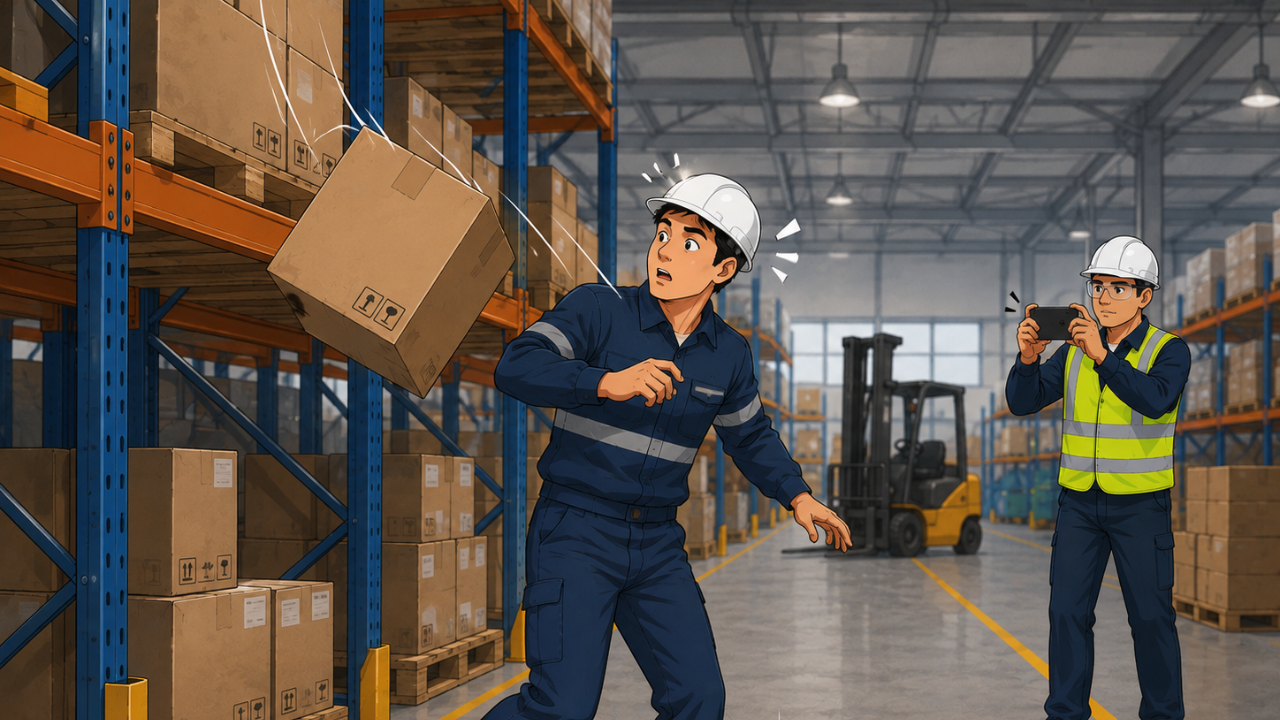
Walk any production floor long enough and a pattern shows up: nearly every serious incident had a quieter version of itself days or weeks earlier. A guard left off after a repair. A worker rushing a lift without help. A spill that got mopped up but never reported. Most plants have some version of these near-miss happening constantly, and most of them go nowhere because nobody wrote them down. That’s the gap safety observation software exists to close. Rather than waiting for something to go wrong and then investigating why, a proactive safety program tries to catch the small stuff first, the unsafe habits and sketchy conditions that precede a real injury. Plenty of sites still run this process on paper: a clipboard, a stack of observation cards, maybe a verbal mention at shift change. It works, sort of, until the card gets lost or the mention gets forgotten by the next shift. Moving that process onto a digital platform means the observation gets captured once, routed somewhere useful, and actually followed through to a fix.
What Is Safety Observation Software?
At its core, safety observation software helps employees, supervisors, and EHS teams report hazards before they turn into serious problems. These observations can include unsafe acts, such as skipping a lockout step, unsafe conditions, such as damaged stairs or uncovered chemical drums, and positive safety behaviors, such as proper PPE use or stopping work to report a hazard. Recording both problems and good practices helps organizations understand what is happening on the shop floor and encourage safer behavior. Unlike incident or near-miss reporting, safety observations happen before an incident occurs, giving teams a chance to identify and fix potential hazards early.
AI-powered cameras can continuously monitor the work area, detect unsafe acts or conditions, and automatically generate safety observations when potential hazards are identified. This can help safety teams spot issues that may otherwise go unnoticed during routine monitoring.
How Does Safety Observation Software Work?
The real usefulness of this kind of platform shows up in how an observation actually moves from “someone noticed something” to “the problem got fixed.”
1. Identify the Hazard
A supervisor doing a routine walk spots a machinist working near a grinder without safety glasses, or a maintenance tech notices an interlock was never reset after a repair job. Catching it in the moment matters more than it sounds, because details fade fast once a shift moves on.
2. Report It on the Spot
With a phone in hand, the observer logs the finding right there on the floor rather than waiting for a toolbox talk or shift handoff, while the hazard is still visible and the memory is still fresh.
3. Add Photos, Location, and Detail
A photo of a blocked fire exit, the exact bay or line number, and a short description remove any ambiguity about what was actually wrong, and save a second trip back to the site just to check.
4. Categorize the Observation
Each entry gets sorted, unsafe act, unsafe condition, or a positive note, and linked to the relevant area or equipment. Skipping this step is how an observation log turns into an unsearchable pile within a few months.
5. Assess Risk
Not every finding deserves the same urgency. A dusty shelf in a rarely used closet doesn’t carry the same weight as a blocked emergency exit in a high-traffic aisle, so the platform assigns a risk level, low, medium, high, or a numeric score, to help the EHS team triage.
6. Assign Corrective Action
Someone gets made responsible, a maintenance lead for a broken guard, a shift lead for a PPE conversation, and a deadline goes on the ticket. This is the step that turns an observation program from paperwork into an actual process.
7. Track Progress
The assigned owner updates status as the fix moves along, and an EHS manager can check in without physically hunting someone down on the floor.
8. Verify and Close
Once a fix is reported complete, someone verifies it in person, confirming the guard is actually bolted back on rather than just marked resolved, before the observation is formally closed.
9. Analyze the Data
Once enough observations accumulate, patterns start to matter more than any single entry, pointing toward training gaps, workflow issues, or repeat problem areas.
| Stage | What Happens | Why It Matters |
|---|---|---|
| Identify | Hazard or behavior spotted on the floor | Nothing downstream works if this step doesn't happen |
| Report | Logged on mobile/web in real time | Prevents lost detail and delayed follow-up |
| Document | Photo, location, description added | Removes ambiguity about the actual issue |
| Categorize | Tagged as act, condition, or positive note | Makes the data searchable later |
| Assess Risk | Assigned a risk level | Lets EHS teams triage instead of treating everything equally |
| Assign Action | Owner and deadline attached | Converts a report into accountability |
| Track | Status updated as work proceeds | Gives visibility without manual chasing |
| Verify & Close | Fix confirmed in person | Ensures the fix is real, not just marked done |
| Analyze | Trends reviewed across observations | Surfaces recurring risks and training gaps |
Key Features of Safety Observation Software
Mobile Reporting
Arguably the feature that decides whether the whole program works. If logging a hazard means walking back to an office computer, most people won’t bother, and the observation dies with them.
Customizable Observation Forms
Different parts of a plant need different fields, forklift traffic for a warehouse, spill containment for a chemical area. A generic form pushes people toward vague, unhelpful entries.
Photo and Video Evidence
Attaching visual proof to a report saves a second site visit just to understand what was actually being described.
Risk Classification
Separates genuinely urgent findings from routine housekeeping notes, so limited EHS time goes where exposure is highest.
Corrective-Action Tracking
Arguably the most important feature. A program that only collects reports without resolving hazards burns out participation fast.
Notifications and Reminders
Keeps corrective actions from quietly slipping past their deadline, rather than relying on someone’s memory.
Dashboards and Analytics
Turns individual reports into something leadership can actually use, showing which departments, hazard types, and areas need attention.
Centralized Records
Means a plant manager isn’t stitching together notes from five different supervisors’ notebooks.
Role-Based Access
Keeps the system usable at every level, operators see what’s relevant to them, while leadership gets the site-wide trend view.
Platforms like ehs4safety approach this by building the reporting, categorization, and corrective-action workflow into a single connected system rather than several disconnected tools, so an observation logged on the floor and the fix assigned to close it live in the same record instead of separate spreadsheets or email threads.
Benefits of Using Safety Observation Software
Faster Reporting
An observation logged from a phone reaches the responsible party the same day, rather than after a weekly meeting where paper forms finally get reviewed. What appears to be a small gap can actually have a significant impact. A blocked emergency exit noticed on a Monday and only reviewed the following Monday has sat unresolved for a full week, during which anyone relying on that exit was carrying real risk without knowing it. Cutting that lag from days down to minutes is less about convenience and more about shrinking the window where a known hazard still lives on the floor.
Better Employee Participation
When people see a reported hazard actually get fixed, they’re more inclined to flag the next one. When reports vanish into a drawer, participation drops off just as fast. This works both ways, and it compounds. A worker who submits three observations and watches all three get resolved starts treating reporting as a normal part of the job rather than an extra task nobody asked for. A worker whose first report goes nowhere usually doesn’t file a second one, and tells coworkers about it too. Participation, once it starts eroding, tends to erode across a whole shift or department rather than staying isolated to one disengaged person.
Early Hazard Identification
A loose guard reported today and fixed this week never gets the chance to become the near miss, it might have been three months down the line. Most serious incidents on a manufacturing floor don’t come out of nowhere; they follow a slow build where the same small deviation goes unaddressed long enough to eventually catch someone at the wrong moment. Catching that deviation while it’s still a minor observation, rather than after it’s already caused a close call, is the entire logic behind running an observation program in the first place.
Stronger Corrective-Action Follow-Through
Assignments and deadlines stay visible instead of dependent on memory. Paper-based systems tend to rely on whoever picked up the observation card remembering to follow up, which works fine until that person gets pulled onto a different priority or rotates to a different shift. A digital system keeps the assignment attached to the observation itself, with a deadline that doesn’t disappear just because the original assignee gets busy, and that persistence is what actually closes the loop instead of leaving corrective actions to quietly stall.
Better Visibility for EHS Teams
Managers get real insight into shifts and areas they can’t personally walk every day. A single EHS manager covering a plant that runs three shifts across multiple production lines simply cannot be on the floor for all of it, and a night shift with a different supervisor and a different set of habits can develop its own blind spots without anyone noticing. Observation records give that manager a way to see what’s actually happening on shifts they never personally walk, instead of only hearing about problems after something goes wrong.
Data-Driven Safety Decisions
Without observation data, safety priorities tend to get set by whichever incident happened most recently or whichever manager raised a concern most forcefully, which isn’t necessarily where the actual risk is concentrated. A few months of categorized observation data lets an EHS team point to a specific line, task, or shift and say the exposure is genuinely higher there, and back that up with numbers instead of an educated guess.
Stronger Safety Culture
This one depends entirely on trust. If workers hesitate to flag an unsafe act for fear of blame, or assume a reported hazard will just sit there, those early warning signs stay buried instead of reaching anyone who can act on them, and a potential incident that never had to happen eventually does. Flip that culture around, and observations get submitted sooner, corrective actions get closed, and the organization starts learning from patterns before they escalate. That loop of noticing, reporting, fixing, and learning is what steadily shrinks the number of potential incidents that ever become real ones.
Better Audit Readiness
Inspectors generally look for proof of a functioning, well-documented program with traceable follow-through, not a policy that only exists on paper. A written safety observation policy sitting in a binder doesn’t demonstrate much on its own. What holds up during an audit is a record showing observations actually being submitted, categorized, assigned, and closed over time, with dates and names attached. That kind of trail is far easier to produce from a searchable digital system than from a stack of paper cards scattered across several supervisors’ desks.
What Types of Safety Observations Can Be Reported?
| Observation Type | Manufacturing Examples |
|---|---|
| Unsafe Behaviors | Bypassing a machine guard during changeover; climbing on equipment instead of using an approved platform |
| Unsafe Conditions | Cracked floor grate near a walkway; overloaded electrical panel; leaking hydraulic line |
| Equipment-Related | Damaged machine guard; expired fire extinguisher; forklift horn not working |
| Housekeeping & Environmental | Blocked emergency exits; chemical containers without secondary containment; debris near a doorway |
| High-Risk Work | Confined space entry, hot work, or work at height where a missed safety step can have serious consequences |
A confined space entry without a documented atmospheric test, for example, should be escalated immediately rather than remaining in a routine review queue.
How Safety Observation Data Improves Workplace Safety
Identifies Recurring Hazards
If the same unsafe lifting technique keeps showing up in reports from one line, that’s less about one careless worker and more about a training gap or a process setting people up to cut corners.
Flags High-Risk Locations and Tasks
A loading dock generating repeated forklift-related reports tells an EHS team exactly where to focus retraining, instead of spreading effort evenly across areas that don’t need it.
Exposes Whether Fixes Actually Worked
If the same machine guard issue keeps reappearing after being marked closed, the real fix probably needs to move from a quick patch to an actual engineering change.
Measures Corrective-Action Performance
How long actions take to close, and how many stay open past the deadline, gives leadership a concrete number for how well the program is functioning, separate from lagging injury-rate metrics.
Shows Employee Participation Patterns
Watching participation by department and by shift shows where a healthy reporting culture has taken hold and where it still needs coaching.
Functions as a Leading Indicator
Because these observations happen before anyone gets hurt, they show risk building before it shows up in the injury numbers.
Connects to the Rest of the EHS Program
| Connected To | What the Link Provides |
|---|---|
| Incident Management | Observations can be checked against what actually happened |
| Near-Miss Reporting | Builds a fuller picture of close calls across the site |
| Inspections & Risk Assessments | Confirms known hazards are being tracked consistently |
| CAPA | Ensures fixes get verified and stay fixed, not just closed on paper |
Left as a standalone log, observations only tell part of the story; folded into the rest of the EHS program, they become part of something closer to real safety intelligence.
Conclusion
Safety observations remain one of the most practical tools a manufacturing site has for catching risk before it turns into harm. Digital reporting gives that process a level of visibility and accountability that paper forms never really manage, and consistent follow-through on corrective actions is what keeps identified hazards from quietly sitting unresolved. None of it works without a workforce that actually feels comfortable reporting what they see, which is why culture ends up mattering more than the software itself. Sites that treat observation data as part of one connected safety picture, rather than a standalone checklist, tend to catch risk earlier and act on it faster. For plants building or refining that approach, safety observation software provides the structure to make proactive safety a daily habit instead of something that only gets attention after an incident.


