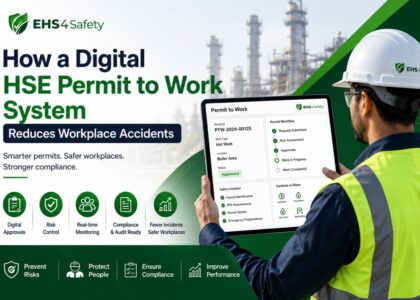
Controlling hazardous work activities is one of the most important responsibilities in any industrial environment. A Digital Permit to Work System is increasingly being adopted to manage high-risk tasks such as hot work, confined space entry, electrical maintenance, and work at height more effectively. Improper authorization in these activities can lead to serious accidents, regulatory penalties, and operational losses. For decades, organizations relied on manual Permit to Work (PTW) processes. Today, however, the shift toward digital systems is transforming how industries improve safety, compliance, and operational efficiency. The real question is no longer whether digital tools are available — it is which approach delivers better long-term results.
Manual Permit to Work vs Digital Permit to Work System
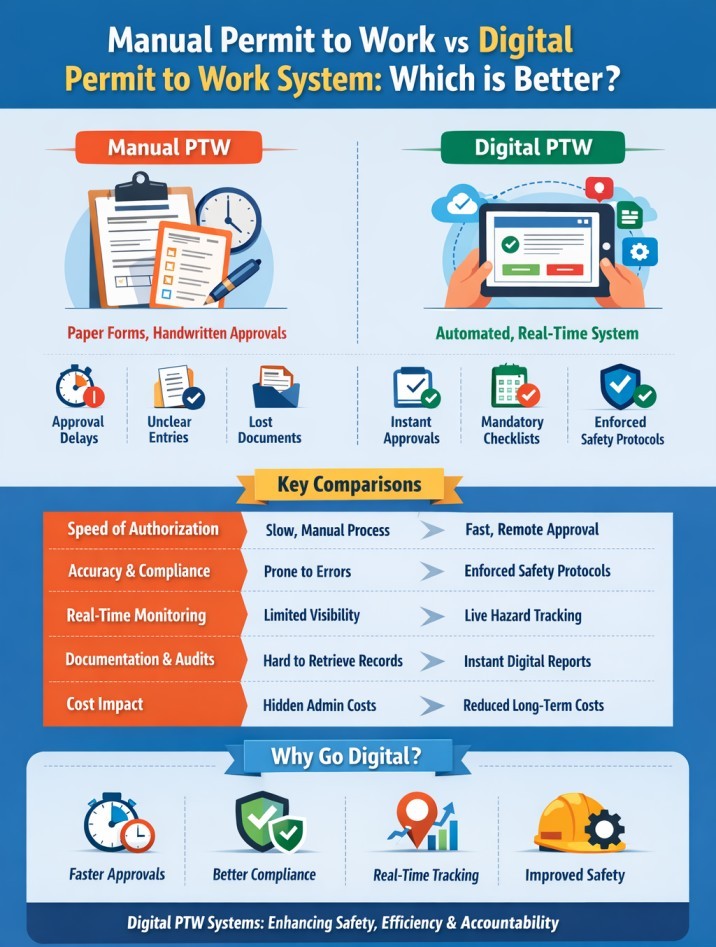
Manual Permit to Work systems operate entirely on physical documentation. Supervisors fill out printed forms, identify hazards, specify safety controls, and collect handwritten approvals before allowing work to begin. This approach appears simple and inexpensive. It does not require internet connectivity or specialized software. For small sites with limited activities, paper permits may seem manageable.
However, challenges become visible as operations grow:
Approvals are delayed if responsible authorities are unavailable
Handwritten entries may be unclear or incomplete
Tracking multiple active permits is difficult
Paper documents can be misplaced or damaged
Retrieving records for audits takes significant time
In complex industrial settings, manual processes often struggle to maintain visibility and control.
How a Digital Permit to Work System Improves Hazard Control
Digital Permit to Work systems replace physical forms with structured electronic workflows. Instead of manually filling out documents, users enter permit details into a centralized platform that guides them step by step. The system ensures hazard identification, risk controls, isolation steps, and safety precautions are properly documented before submission.Approvals are routed automatically to designated authorities.
Key capabilities of digital PTW systems include:
Automated multi-level approval processes
Mandatory safety checklists
Real-time tracking dashboards
Mobile access for remote approvals
Instant notifications and alerts
Secure digital record storage
Rather than functioning as a passive document, a digital permit becomes an active safety control mechanism. When integrated with a comprehensive EHS Management Software, the Digital Permit to Work System becomes part of a unified safety ecosystem.
Digital Permit to Work System vs Manual PTW Process
1. Speed of Authorization
In manual systems, documents physically move from one person to another. If a supervisor is in a meeting or off-site, work may be delayed. Digital systems allow instant submission and remote approval. Decision-makers can review permits through desktop or mobile devices, significantly reducing waiting time and operational interruptions.
For industries where downtime directly affects productivity, this difference is critical.
2. Accuracy and Compliance Strength
Paper-based permits rely heavily on individual attention to detail. Missing information or skipped safety precautions can increase compliance risk. Digital systems enforce structured data entry. Users cannot submit permits unless required fields are completed. Many organizations design their workflows in alignment with regulatory guidance such as that provided by the Occupational Safety and Health Administration to strengthen safety compliance.
This structured approach reduces human error and improves accountability.
3. Real-Time Monitoring of High-Risk Activities
One of the biggest weaknesses of manual systems is limited visibility. Supervisors often lack a clear overview of how many permits are active or where hazardous activities are happening simultaneously.
Digital Permit to Work platforms provide centralized dashboards showing:
Active permits by location
Type of hazardous work
Approval status
Expiry timelines
This visibility helps prevent overlapping high-risk activities and enhances overall site coordination.
4. Documentation and Audit Readiness
Paper permits require physical storage space and manual archiving. During inspections or investigations, locating specific records can consume valuable time. Digital systems store permits in searchable electronic databases. Reports can be generated instantly, supporting internal audits, external inspections, and compliance verification.
Having organized digital records improves transparency and traceability.
5. Long-Term Cost Impact
Although manual systems appear low-cost initially, hidden expenses often accumulate:
Printing and stationery
Administrative handling
Storage requirements
Delays in project execution
Costs associated with safety incidents
Digital systems require implementation investment but often reduce administrative burden and operational delays over time.
Why Industries Prefer a Digital Permit to Work System
As industrial environments become more dynamic, safety management must evolve. Organizations are increasingly adopting digital solutions to improve control, communication, and compliance. Solutions like EHS4Safety offer structured Digital Permit to Work systems designed to streamline approvals, monitor hazardous activities in real time, and maintain comprehensive audit trails.
By integrating digital PTW into broader EHS processes, companies move from reactive paperwork to proactive risk management.
Is a Digital Permit to Work System Better Than Manual Permits?
Manual Permit to Work systems may still function in small-scale operations with limited risk exposure. However, they often lack scalability, visibility, and automation capabilities required in larger industrial settings.
Digital Permit to Work systems provide:
Faster approvals
Stronger compliance controls
Real-time monitoring
Improved documentation management
Enhanced coordination between teams
For organizations seeking higher operational efficiency and stronger workplace safety performance, digital PTW systems offer clear advantages. Ultimately, the better system is the one that reduces risk, improves visibility, and supports a strong safety culture. In modern industrial environments, digital solutions increasingly meet those expectations more effectively than manual processes.