Introduction
In today’s competitive industrial world, manufacturing companies must maintain strict safety standards while meeting regulatory and production goals. Relying on paper files, spreadsheets, and disconnected systems makes safety management slow, error-prone, and difficult to audit. This is why EHS software for manufacturing companies has become an essential digital foundation for modern factories.
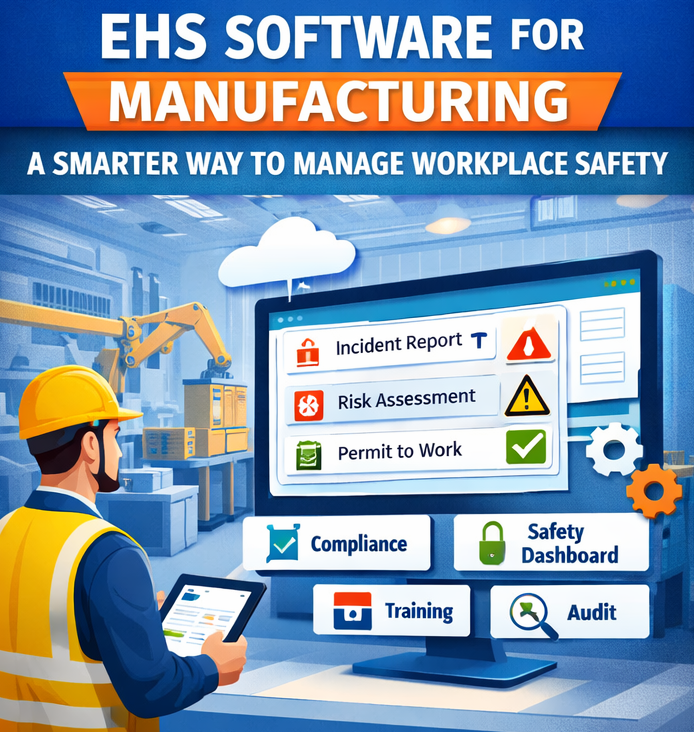
A cloud-based EHS platform helps manufacturing plants manage incidents, risks, compliance, training, audits, and work permits from a single, centralized system. It gives safety teams real-time visibility into what is happening on the shop floor, allowing them to prevent accidents instead of reacting after damage has already occurred.
Why Manufacturing Companies Need EHS Software Today
Manufacturing environments involve heavy machinery, electrical systems, hazardous materials, and high-risk maintenance activities. Even a small mistake can lead to serious injuries, production downtime, or regulatory penalties. Traditional safety systems are not designed to handle the speed and complexity of modern manufacturing operations.
EHS software for manufacturing companies replaces manual processes with automated workflows that ensure safety rules are followed consistently. From recording near misses to tracking compliance and training, everything becomes structured, searchable, and traceable. This improves accountability and helps management make informed safety decisions.
Core Capabilities of Manufacturing EHS Software
1. Incident Reporting and Investigation
A digital EHS system allows employees to report accidents, unsafe conditions, and near misses instantly. Instead of paperwork, all data is captured in a central platform with time, location, images, and witness information. Safety teams can then investigate root causes and assign corrective actions to prevent repeat incidents.
Learn more about this feature on the Incident Management Software
2. Risk Assessment and Hazard Control
Manufacturing risks must be identified and managed before they cause harm. EHS software helps safety teams assess hazards, rate their severity, and define control measures. This ensures dangerous processes are handled with proper precautions and approvals.
By continuously updating risk registers, companies can maintain a safer working environment across all departments and locations.
3. Digital Permit to Work System
High-risk tasks such as maintenance, electrical work, welding, or equipment isolation must be authorized through a permit process. A digital permit-to-work system ensures that all safety checks, approvals, and isolation steps are completed before work begins.
See how this works on the Permit to Work Software
This prevents unauthorized work, improves traceability, and strengthens safety compliance across manufacturing plants.
4. Audit and Compliance Management
Manufacturing companies must comply with safety and environmental regulations such as ISO 45001, OSHA, and local factory laws. EHS software simplifies this by storing inspection records, compliance documents, and audit trails in one place.
Learn more on the Safety Compliance Management
Audits become easier, faster, and more accurate when all safety data is available digitally.
5. Real-Time Dashboards and Analytics
Modern EHS systems provide live dashboards that show safety performance indicators such as incident trends, open risks, and overdue actions. Managers can quickly identify problem areas and take corrective steps before incidents occur.
This data-driven approach helps manufacturing companies move from reactive safety to proactive prevention.
Features That Strengthen Safety Culture
Beyond core safety controls, EHS software supports long-term workforce engagement and accountability:
Skill and Safety Readiness Tracking – Companies can digitally track worker qualifications, safety inductions, and job-specific authorizations to ensure only trained employees perform critical tasks.
Centralized Document Control – Safety manuals, SOPs, and policies are stored in one secure location with full version history.
Mobile Access – Workers and supervisors can report hazards, conduct inspections, and close actions directly from the shop floor.
Predictive Safety Intelligence – AI-driven insights highlight high-risk patterns and allow early intervention before incidents occur.
These capabilities make safety management continuous and transparent.
Business Benefits of EHS Software in Manufacturing
Adopting EHS software for manufacturing companies delivers measurable business value:
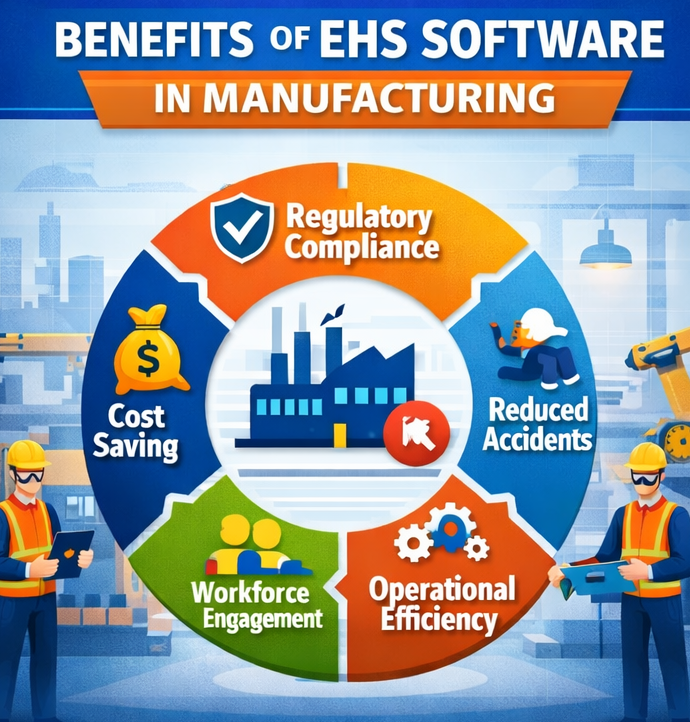
Better Regulatory Compliance
Automated records, inspection logs, and audit trails ensure full visibility during inspections and audits.
Lower Accident Rates
Structured reporting and proactive risk controls reduce workplace injuries and near misses.
Higher Operational Efficiency
Automated workflows eliminate manual paperwork and speed up approvals, inspections, and reporting.
Stronger Workforce Engagement
Employees feel safer and more responsible when they can actively participate in reporting and prevention.
Reduced Costs
Fewer accidents, fines, and downtime lead to significant long-term savings.
Conclusion
For modern manufacturing companies, digital safety management is no longer optional. EHS software for manufacturing companies creates a connected safety ecosystem that protects workers, ensures compliance, and improves productivity.
Whether you want to improve incident tracking, streamline audits, or implement digital permits, a powerful EHS platform gives you the control and visibility needed to run safer, smarter operations