Introduction
Digital EHS platforms help organizations manage workplace safety efficiently by centralizing safety data, streamlining workflows, and ensuring compliance across all operations. As businesses grow and operations become more complex, adopting a digital safety system enables proactive risk management and strengthens overall safety performance.
From Manual Safety Management to Digital EHS Platforms
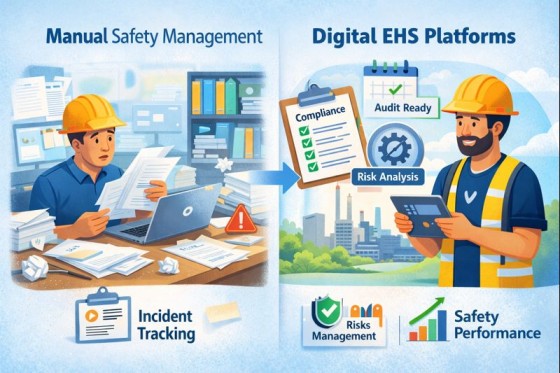
Traditional safety management relies on paper forms, spreadsheets, and email-based communication. While this method has worked in the past, it often causes delays in reporting, inconsistent records, and limited accountability. A digital EHS platform centralizes all safety information in one place, allowing organizations to track incidents, inspections, and corrective actions in real time. Centralized data reduces human errors, ensures accurate reporting, and improves overall governance of workplace safety management.
By moving away from manual processes, companies can focus on preventing incidents instead of spending excessive time chasing missing records or incomplete reports.
Improving Incident Visibility and Response with Digital EHS Platforms
Timely reporting of incidents and near misses is critical to prevent repetition and serious accidents. With a digital incident reporting system, employees can report hazards or incidents immediately using desktop or mobile devices. These platforms provide structured workflows that guide safety teams through root cause analysis and corrective action planning. By addressing the real causes of incidents rather than just the symptoms, organizations can reduce workplace accidents and achieve measurable safety performance improvement.
Immediate reporting and visibility also support a culture of accountability, where every team member understands their role in maintaining a safe work environment.
Strengthening Compliance and Audit Readiness
Compliance with safety regulations requires proper documentation and preparation for audits. Manual systems increase the chances of missing records or incomplete evidence, which can result in penalties or unsafe working conditions. A centralized EHS platform stores compliance documents securely, maintains a clear audit trail, and tracks inspections and safety reviews automatically. Managers can generate reports at any time, making audit readiness simple and reliable across all locations.
This digital approach also reduces administrative workload, allowing safety officers to spend more time on proactive measures rather than paperwork.
Enabling Proactive Risk Management Using Digital EHS Platforms
Modern EHS platforms allow organizations to identify hazards and assess risks before incidents occur. By analyzing historical data and trends, safety teams can identify high-risk activities and implement preventive controls.
A risk management system integrated into the EHS platform helps organizations take proactive steps rather than reactive ones. Early hazard detection and preventive measures not only reduce incidents but also improve overall safety culture in the workplace.
Consistency Across Sites and Teams
Companies operating at multiple locations often struggle with inconsistent safety practices. Different sites may follow different procedures, which can lead to reporting errors and compliance issues.
Digital EHS platforms enforce standardized safety workflows, ensuring that all teams follow the same processes and safety standards. This consistency improves reporting accuracy, simplifies oversight for management, and builds trust across all levels of the organization.
Supporting Continuous Safety Improvement Through Digital EHS Platforms
Data-driven insights from digital EHS platforms allow organizations to monitor recurring issues, review corrective actions, and analyze safety trends. With this information, companies can refine their safety strategies regularly.
Continuous improvement becomes part of daily operations instead of a reactive response to incidents. This ensures that workplace safety management evolves as the organization grows, creating a sustainable safety culture.
Conclusion
Digital EHS platforms are no longer optional—they are essential for companies aiming to improve safety performance and maintain compliance. By centralizing safety data, standardizing workflows, enabling proactive risk management, and supporting continuous improvement, organizations can reduce incidents, simplify audits, and foster a strong, sustainable safety culture.
Investing in a digital EHS platform is a strategic step that helps companies not only meet compliance requirements but also create a safer, more efficient, and accountable work environment.