Introduction
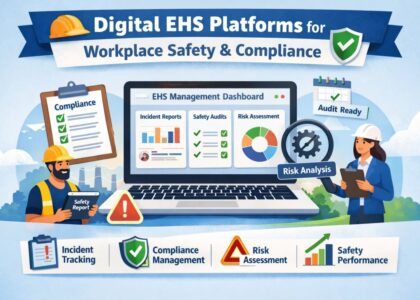
Ensuring workplace safety and regulatory compliance has become a top priority for organizations across industries in India. From manufacturing plants to oil and gas facilities, companies face increasing scrutiny regarding employee safety, environmental regulations, and operational risk management. Traditional methods—paper forms, spreadsheets, and disconnected systems—often fail to provide timely insights, resulting in missed incidents and delayed corrective actions. This is where EHS software in India becomes an indispensable tool. By integrating safety, health, and environmental management into a single platform, EHS software helps organizations track incidents, manage risks, and maintain compliance efficiently.
What Is EHS Software?
EHS software—short for Environmental, Health, and Safety software—is designed to digitize and centralize workplace safety management. It enables organizations to monitor safety processes, enforce compliance, and automate workflows. Modern EHS systems are equipped with features such as incident management, audit management, risk assessment, training tracking, and digital permit-to-work solutions.
By replacing manual methods with a digital approach, companies gain real-time visibility into safety performance and compliance status, reducing operational risks and enhancing accountability at all levels.
Key Benefits of EHS Software in India
1. Faster and Accurate Incident Reporting
Traditional incident reporting is often delayed or incomplete. With EHS incident management software, employees can report accidents, near misses, and unsafe conditions instantly via mobile apps or web portals. Real-time reporting allows safety teams to investigate promptly, attach photos or videos, and track corrective actions. Quick and accurate reporting not only prevents future incidents but also ensures compliance with OSHA or local Indian regulations.
2. Simplified Compliance Management
Organizations must adhere to numerous local and international regulations, such as ISO 45001 or Indian labor safety standards. EHS software solutions maintain audit-ready records, automate compliance checklists, and provide reminders for upcoming inspections or certification renewals. This systematic approach reduces the risk of penalties and ensures the company stays compliant across multiple locations and departments.
3. Structured Risk Assessment and Control
Workplace hazards can vary widely depending on the industry. With EHS software systems, hazards are systematically identified, evaluated, and controlled. Risk assessments can be standardized, documented, and shared across teams. AI-enabled risk assessment features allow companies to focus on high-risk activities, plan preventive measures, and minimize potential incidents. This proactive approach not only protects employees but also reduces operational downtime.
4. Real-Time Analytics and Insights
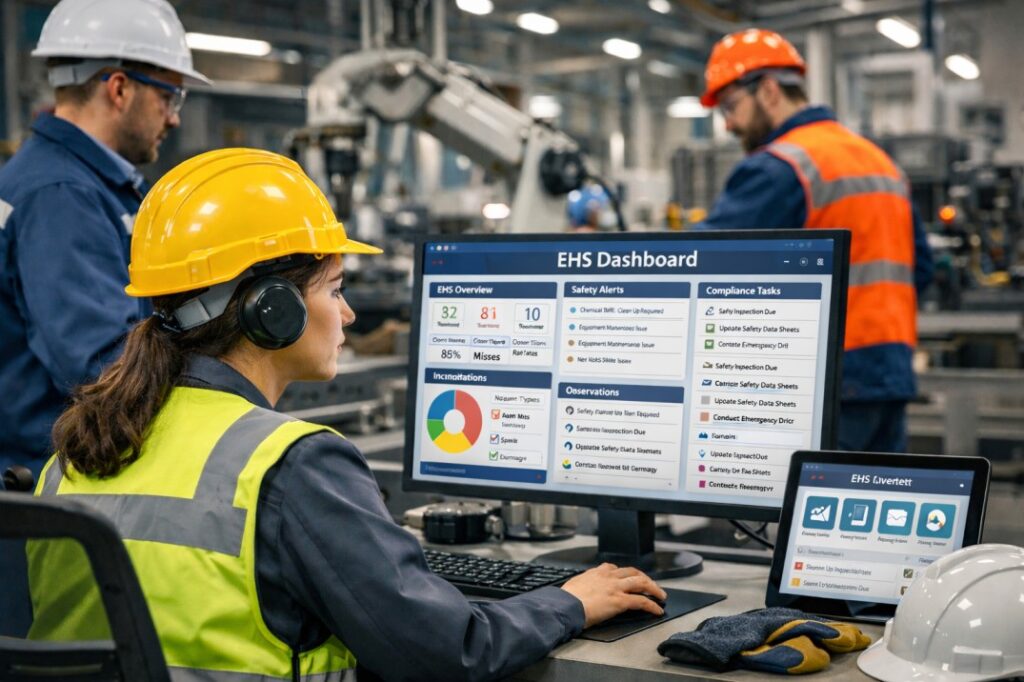
One of the most significant advantages of EHS software is its ability to provide real-time insights. Dashboards show trends in incidents, high-risk areas, and compliance gaps, enabling management to make data-driven decisions. With predictive analytics, organizations can identify potential hazards before they escalate, improving both workplace safety and operational efficiency.
5. Enhanced Employee Engagement and Training
Effective safety management depends on employee participation. Safety training tracking software integrated with EHS platforms ensures that all employees complete mandatory safety programs and refresher courses. Automated notifications and progress reports help organizations monitor compliance with training requirements. Employees who are better informed about safety protocols contribute to a culture of safety, reducing accidents and improving morale.
6. Streamlined Permit-to-Work Processes
High-risk operations require strict permit management. EHS permit-to-work software digitizes approval workflows, ensuring that tasks such as maintenance, confined space entry, or electrical work are carried out safely. Digital permits provide traceability, automatic notifications, and real-time approvals, reducing manual errors and enhancing operational efficiency.
Why Choose EHS Software in India
Investing in EHS software in India empowers organizations to maintain a safer and more compliant workplace. It streamlines safety management, ensures consistent processes across multiple sites, and enables faster reporting and corrective action. Companies benefit not only from improved safety outcomes but also from reduced costs related to incidents, non-compliance penalties, and operational disruptions.
AI-powered features, mobile accessibility, and customizable dashboards make modern EHS platforms suitable for a variety of industries, including manufacturing, oil and gas, chemical processing, and construction. By adopting a comprehensive EHS system, organizations can build a proactive safety culture while optimizing productivity.
Conclusion
Workplace safety is no longer a reactive process. EHS software transforms safety management by providing real-time reporting, risk assessment, compliance monitoring, and employee training in a single platform. Organizations in India can leverage these tools to prevent accidents, ensure compliance, and maintain operational excellence.
Implementing a reliable EHS software system is not just a regulatory requirement—it’s a strategic investment that protects employees, enhances productivity, and strengthens organizational reputation.