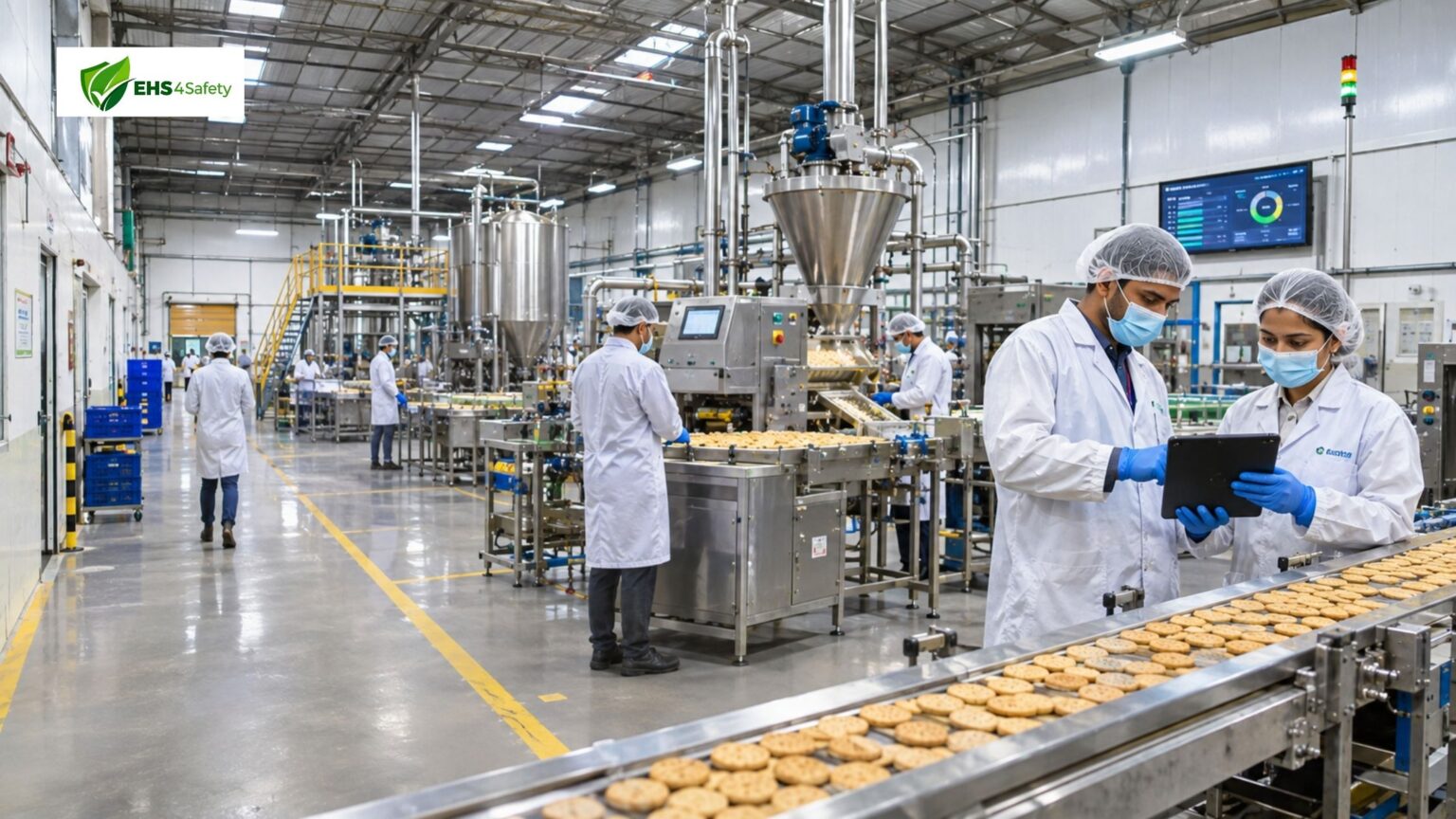
Walk through any food processing plant at the start of a shift and you will see how much is happening at once. Conveyors run, washdown crews hose the floors, ammonia moves through the refrigeration lines, and a new set of operators takes over from the last. Hygiene rules and safety regulations apply to every one of those activities at the same time. Miss one inspection or let one near miss go unreported, and the result can be an injury, a spoiled batch, or an audit finding that halts production. The importance of EHS software in the food industry comes down to this: it gives safety, environmental, and compliance teams one place to spot hazards, record what was done about them, and show proof when an auditor asks. Below, we look at the main risks in food plants, where manual methods fall short, what digital tools change, and how to choose a platform that fits.
Key EHS Risks in Food Processing Plants
Food facilities are unusual because worker safety, food safety, and environmental duties share the same production floor. A weakness in one area tends to spill into the others.
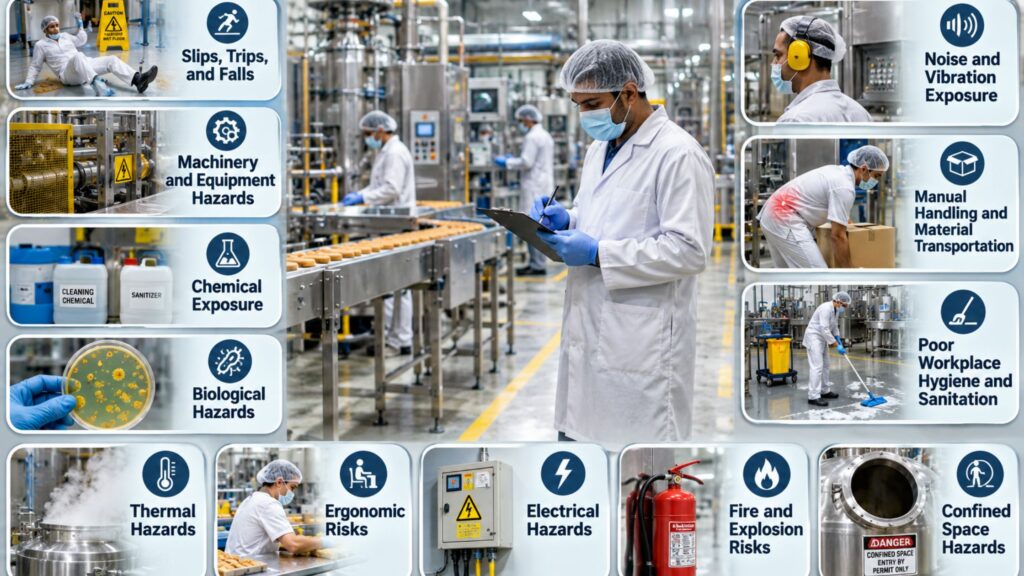
- Slips, Trips, and Falls: Washdown water, grease, and spilled product keep floors slick, and falls remain one of the most common injuries in these plants.
- Machinery and Equipment Hazards: Slicers, grinders, mixers, and packaging lines can cause amputations and crushing injuries, especially during cleaning and maintenance when guards are removed.
- Chemical Exposure: Caustic cleaners, sanitizers, and refrigerants like ammonia can burn skin, harm the lungs, and lead to serious release events.
- Biological Hazards: Pathogens, mold, allergens, and pests threaten employees and consumers alike whenever sanitation controls slip.
- Thermal Hazards: Ovens, fryers, and steam lines cause burns and scalds, while cold storage brings the opposite problem of cold stress.
- Ergonomic Risks: Cutting, packing, and lifting for hours on a fast line wears down the body, and musculoskeletal injuries tend to show up months later.
- Electrical Hazards: Water and powered equipment sit uncomfortably close in most food plants, which raises the odds of shocks and short circuits.
- Fire and Explosion Risks: Flour, sugar, and starch dust can ignite, and cooking oils and gas lines add more ignition sources.
- Confined Space Hazards: Tanks, silos, and vats require permit-based entry because of low oxygen, toxic atmospheres, and the risk of engulfment.
- Noise and Vibration Exposure: Compressors, bottling lines, and heavy machinery slowly damage hearing and can cause vibration-related injuries.
- Manual Handling and Material Transportation: Forklifts, pallet jacks, and repeated lifting lead to strains and to collisions between vehicles and people on foot.
- Poor Workplace Hygiene and Sanitation: Weak sanitation harms worker health and product integrity together, so a single lapse creates two compliance problems.
Challenges of Managing EHS Manually in Food Plants
Many food manufacturers still run safety on paper forms, shared drives, and email threads. That setup can survive at one small site. It starts to fail once there are multiple plants, several shifts, and a growing list of regulatory obligations.
- Paper-Based Documentation and Record-Keeping: Forms go missing or get damaged, and each supervisor fills them in a little differently. Locating one record for an audit can take most of a day.
- Delayed Incident Reporting and Investigation: When a report waits for someone to type it up, the investigation begins late, and the hazard often stays on the floor in the meantime.
- Difficulty Tracking Regulatory Compliance: Safety, environmental, and food safety rules overlap. Following permit renewals and reporting dates by hand makes a missed deadline almost inevitable.
- Inefficient Safety Inspections and Audits: Findings on paper checklists vary from one inspector to the next, and failed items rarely turn into assigned tasks.
- Poor Hazard Identification and Risk Monitoring: Near misses jotted in separate notebooks never add up to a pattern, so recurring problems stay hidden.
- Lack of Real-Time Safety Visibility: Managers often see performance numbers weeks late, after the chance to step in has passed.
- Difficulty Tracking Corrective and Preventive Actions (CAPA): Actions agreed in a meeting or an email often have no owner, no deadline, and no check that the fix worked. The same issue then comes back.
Importance of EHS Software in the Food Industry: Key Benefits
A purpose-built platform joins up the steps that paper keeps apart. Reporting, investigation, action, and verification happen in one system, which is why more food manufacturers now see EHS software as basic infrastructure.
- Centralized EHS Data and Documentation Management: Policies, permits, training records, inspection results, and incident files live in one searchable place, so audit preparation becomes ordinary work.
- Improved Workplace Safety and Hazard Identification: An employee can report a hazard from a phone in under a minute, and safety teams can see which lines or shifts keep producing the same problem.
- Streamlined Incident Reporting and Investigation: Standard digital forms, automatic notifications, and guided root cause analysis shorten the gap between an event and a documented response.
- Automated Safety Inspections and Audits: Scheduled checklists with photo evidence keep inspections consistent, and failed items escalate without anyone having to remember them.
- Better Regulatory Compliance Management: Reminders for permits, calibrations, and reporting deadlines lower the chance of penalties and unplanned shutdowns.
- Efficient Corrective and Preventive Action (CAPA) Tracking: Every action has an owner, a due date, and a closure check, so management can show that issues were resolved and not simply logged.
- Real-Time Safety Monitoring and Reporting: Dashboards show leading and lagging indicators as they move, which lets leaders respond while a trend is still small.
- Improved Employee Safety Training and Awareness: The system assigns training, records who completed it, flags certificates close to expiry, and can trigger retraining after an incident.
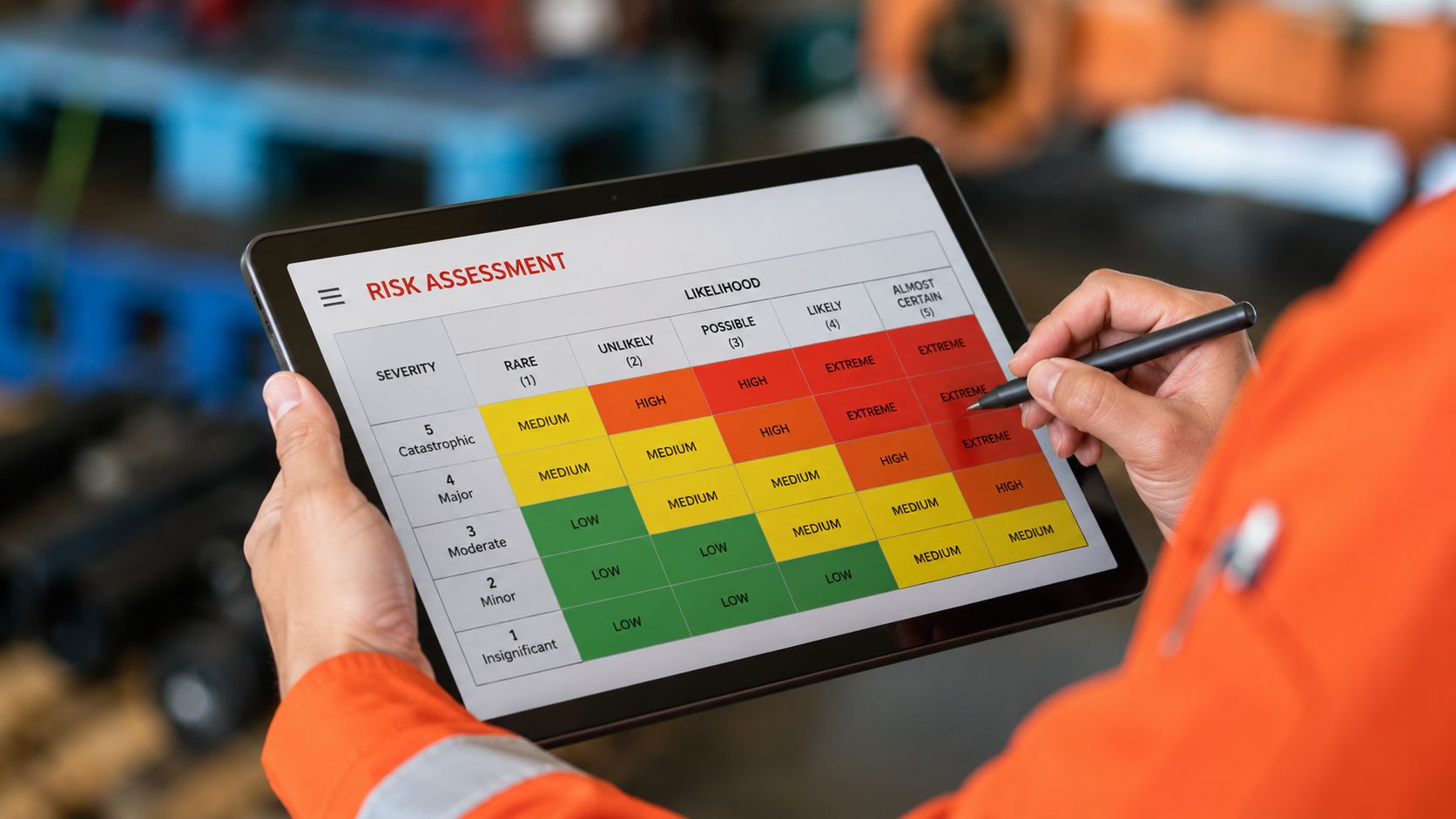
- Effective Risk Assessment and Mitigation: Standard risk matrices rank hazards by severity and likelihood, so limited budgets go to the biggest exposures first.
- Enhanced Emergency Preparedness and Response: Emergency plans, contact lists, drill records, and chemical inventories stay within reach when a spill, fire, or ammonia leak calls for a fast, coordinated response.
Software also changes behavior over time. When reporting is easy and follow-up is visible, workers begin to trust the process and supervisors take ownership of fixes. Safety then becomes part of the daily routine and stops being a quarterly scramble.
Regulatory and Standards Alignment
| Standard | What It Covers | How EHS Software Helps |
|---|---|---|
| OSHA 29 CFR 1910 | General industry safety standards, including machine guarding, lockout/tagout, hazard communication, permit-required confined spaces, and process safety for hazardous chemicals such as ammonia | Schedules inspections, stores procedures, and documents employee training against each requirement |
| OSHA 1904 | Recording and reporting of work-related injuries and illnesses | Generates the required logs and summaries from incident data, which reduces transcription errors and missed entries |
| ISO 14001 | Environmental management, including monitoring of wastewater, emissions, and waste, and demonstrating continual improvement | Supports objective tracking, document control, and audit trails |
| ISO 22000 and FSSA | ISO 22000 sets requirements for food safety management systems, while FSSAI regulations in India define hygiene, sanitation, and licensing obligations for food businesses. | Links sanitation checks, supplier controls, and corrective actions to these requirements so evidence is ready when auditors ask |
Case Study: EHS Software for Food Industry in Practice
This illustrative scenario shows how EHS software for food industry operations works on the ground. It follows a mid-sized packaged foods manufacturer with several processing and packaging plants, a profile that fits many growing Indian food businesses.
The situation: Each plant tracked safety in its own way, with paper checklists, local spreadsheets, and incident reports sent by email. Head office could not compare sites or see which hazards kept returning. Preparing for an FSSAI or ISO 22000 audit meant weeks of chasing supervisors for records, and gaps usually surfaced only when the auditor asked for a document.
The turning point: A near miss on an ammonia line, followed by repeated slip incidents on washdown floors, pushed management to look harder at the system. Corrective actions had been agreed upon after earlier events, yet nobody could say who owned them or whether they were finished. The effort was there. The visibility was not.
The approach: The company adopted a centralized EHS platform and rolled it out in phases, starting with incident reporting and inspections.
- Mobile incident and near-miss reporting: Operators logged events and hazards from their phones, with photos, as they happened. This replaced end-of-shift paper forms.
- Scheduled digital inspections: Checklists for machine guarding, chemical storage, and sanitation were assigned by area and shift, and failed items created corrective actions automatically.
- Tracked CAPA with named owners: Every action had an owner, a due date, and a closure check, and overdue items escalated to plant heads.
- Unified compliance records: Training logs, permits, and audit evidence sat in one searchable system, with role-based access for each site.
The results: Over the first year, repeat incidents became less frequent, corrective actions closed faster, and audit preparation shrank from weeks of record chasing to a routine check of current files. Near-miss reports also increased, because workers found it easy to speak up. A single dashboard comparing all plants let leadership direct resources to the highest-risk sites first.
The takeaway: Quick reporting and visible follow-up changed how people acted. Supervisors dealt with small hazards sooner, and audits became a review of records that were already current.
How to Choose the Right EHS Software for a Food Facility
Platforms differ widely, and not all of them cope well with a food environment. Judge vendors against the real conditions on your floor and your plans for growth.
- Mobile and offline access: Connectivity is often poor in production areas, so inspectors and operators should be able to capture data offline and sync it later.
- Multi-site support: If you run several plants or warehouses, look for central reporting with site-level permissions so the head office can compare performance while local teams keep control.
- Configurable workflows: Approval paths, risk scoring, and forms should adjust to your processes without custom coding, since operations vary by product and region.
- Audit and compliance reporting: The system should produce regulator-ready and customer-ready reports quickly, with a clear record of who did what and when.
- Integration and scalability: Confirm that it connects with HR, ERP, and quality systems and can handle more users, modules, and locations over time.
- Vendor support: Implementation help, user training, and responsive service decide whether people actually use the tool, so ask for references from manufacturing customers.
Conclusion
Food plants combine physical, chemical, biological, and environmental risks, and manual methods struggle to keep pace. A digital platform pulls records together, speeds up incident response, keeps corrective actions moving, and gives leaders a current view of performance. It also supports alignment with OSHA, ISO, and FSSAI requirements, which protects workers, products, and the business itself. For any manufacturer that wants fewer incidents, easier audits, and a stronger safety culture, the importance of EHS software in the food industry is hard to ignore. Compare vendors against the criteria above and choose a solution that fits your facility today and can grow with it.
Ehs Software For Food Industry FAQ
EHS software in the food industry is a digital solution that helps food manufacturers manage workplace safety, environmental compliance, hazard identification, incident reporting, and safety inspections through a centralized platform.
EHS software helps food processing facilities identify workplace hazards, prevent accidents, streamline safety inspections, manage compliance requirements, and maintain a safer working environment.
Common EHS risks include slips and falls, machinery hazards, chemical exposure, biological hazards, thermal hazards, ergonomic risks, electrical hazards, fire risks, confined spaces, and poor workplace hygiene.
EHS software helps organizations maintain digital records, schedule inspections, track safety training, manage corrective actions, and organize compliance documentation related to applicable OSHA, ISO 14001, ISO 22000, and FSSAI requirements.
Yes. EHS software enables employees to report incidents and near misses digitally while helping safety teams schedule inspections, document findings, assign corrective actions, and monitor resolution progress.
Food processing companies should look for incident management, safety audits and inspections, risk assessment, corrective action tracking, permit-to-work management, employee training, compliance management, and real-time safety dashboards.