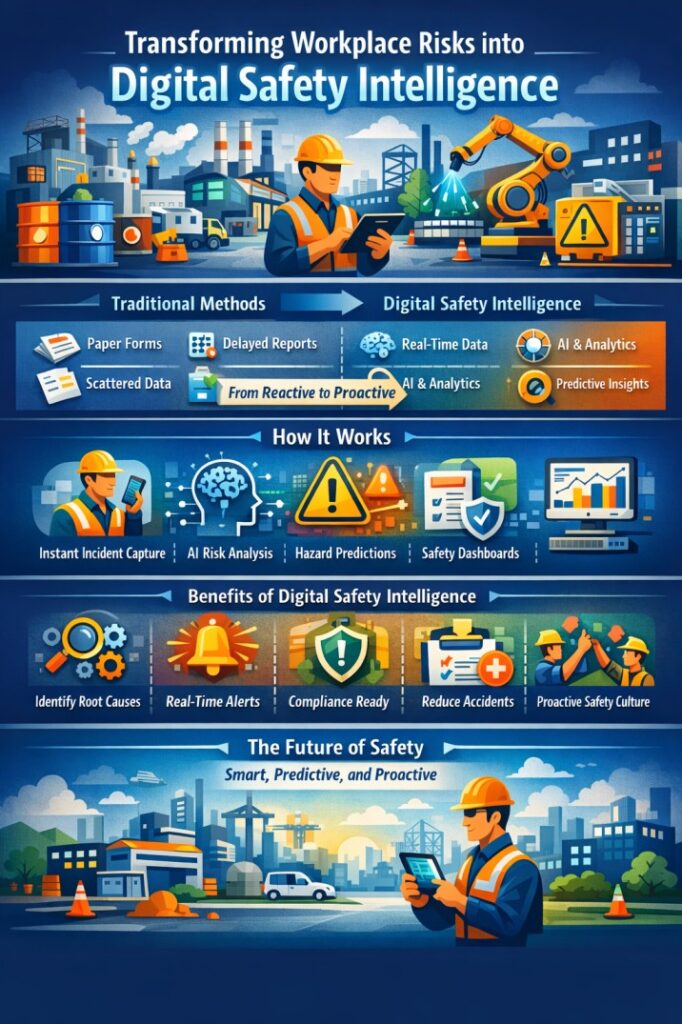
In today’s industrial world, safety is no longer just about wearing protective equipment or filling out checklists. Modern workplaces face complex risks—ranging from hazardous machinery and chemical exposure to human error and environmental threats. Traditional safety systems struggle to keep up with this growing complexity. This is where digital safety intelligence is transforming the way organizations identify, analyze, and control workplace risks.
By converting raw safety data into meaningful insights, organizations can move from reactive incident response to proactive risk prevention. Digital safety intelligence allows companies to predict hazards, optimize safety processes, and ensure regulatory compliance—making it an essential part of modern EHS (Environment, Health, and Safety) management.
Why Traditional Risk Management Is No Longer Enough
Many organizations still rely on paper forms, spreadsheets, and delayed reporting to track incidents and hazards. While these methods worked in the past, they create serious challenges today:
Incidents are reported late
Root causes are difficult to identify
Data is scattered across departments
Trends and patterns go unnoticed
Compliance reporting becomes stressful
These limitations lead to repeated accidents, increased downtime, and higher operational costs. More importantly, they put employees at risk. Digital safety intelligence solves this by collecting real-time safety data, analyzing it automatically, and converting it into actionable insights.
What Is Digital Safety Intelligence?
Digital safety intelligence is the use of technology, data analytics, and AI to monitor, evaluate, and improve workplace safety. Instead of relying on manual processes, organizations use smart platforms to:
Capture incidents instantly
Track unsafe conditions
Analyze risk patterns
Predict future hazards
Guide safety decisions
This creates a single, reliable source of truth for all safety activities—allowing safety managers, supervisors, and leadership teams to make informed decisions quickly.
How Workplace Risks Become Actionable Intelligence
Digital safety platforms convert everyday safety activities into structured data. For example:
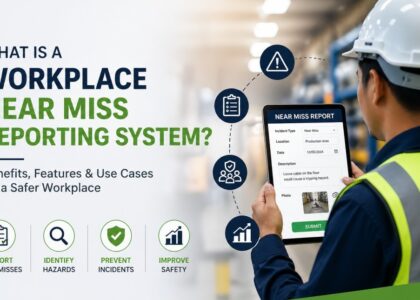
A worker reports a near miss using a mobile phone
A supervisor records an unsafe act
An audit identifies a compliance gap
A machine logs an abnormal condition
All this data is collected in a centralized system. AI and analytics engines then process it to identify:
Repeating hazards
High-risk locations
Equipment causing incidents
Unsafe work behaviors
Compliance weaknesses
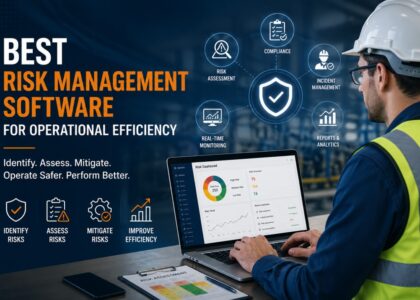
Instead of looking at isolated events, organizations get a full risk picture across departments, sites, and processes.
The Power of AI in Safety Management
Artificial Intelligence plays a major role in digital safety intelligence. AI does not just store information—it learns from it.
With AI-based incident analysis, organizations can:
Automatically identify root causes
Detect hidden risk patterns
Predict where accidents are likely to occur
Prioritize corrective actions
Reduce investigation time
For example, if multiple near misses occur around a specific machine or shift, AI can flag this as a high-risk zone even before a serious accident happens. This allows companies to take preventive action instead of reacting after someone is injured.
Real-Time Risk Visibility Across the Organization
One of the biggest advantages of digital safety intelligence is real-time visibility. Safety managers no longer need to wait for weekly or monthly reports. They can see:
Open incidents
Unsafe conditions
Pending corrective actions
Permit-to-work status
Audit findings
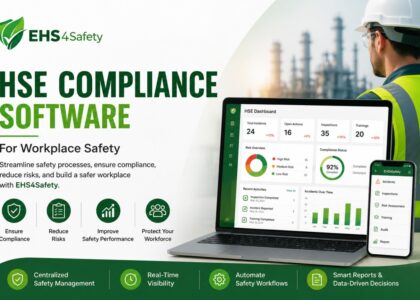
Dashboards provide live insights across all locations, helping leadership understand risk levels instantly. This improves accountability, speeds up decision-making, and ensures that safety is always under control.
Improving Compliance and Audit Readiness
Regulatory compliance is a major challenge in industries such as manufacturing, construction, oil and gas, mining, and chemicals. Digital safety intelligence makes compliance easier by:
Automatically recording safety activities
Maintaining audit trails
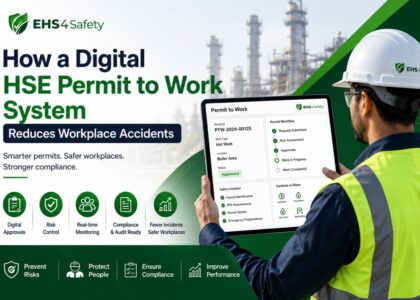
Tracking permits and inspections
Generating compliance reports
Reducing manual errors
When audits happen, all required information is already available in one system—saving time, reducing stress, and avoiding penalties.
Creating a Proactive Safety Culture
Perhaps the most important benefit of digital safety intelligence is cultural change. When workers can report hazards easily using mobile devices, they become more engaged in safety. When management responds quickly with data-driven actions, trust grows.
Over time, this leads to:
Higher near-miss reporting
Faster hazard resolution
Fewer serious incidents
Stronger safety ownership
Better workforce morale
Safety becomes part of everyday work—not just a compliance task.
The Future of Workplace Safety Is Digital
As workplaces become more complex, safety must become smarter. Organizations that rely on outdated methods will struggle with rising risks, regulatory pressure, and operational inefficiencies. Those that adopt digital safety intelligence will be able to predict problems, prevent accidents, and protect their people more effectively.
By transforming workplace risks into digital safety intelligence, companies move from reactive firefighting to proactive protection—creating safer, more resilient, and more productive operations.