Workplace near miss reporting system solutions are becoming essential for organizations that want to prevent workplace accidents before they happen. Many accidents may seem sudden, but they are often preceded by warning signs that businesses fail to notice. These warning signs usually appear as small incidents that do not cause injuries or damage but could have resulted in serious consequences. These incidents are known as near misses.
For example, an employee may trip over loose cables without falling, or equipment may malfunction without harming anyone nearby. While these incidents may seem minor, they often expose hidden risks within daily operations. If businesses ignore these events, they increase the chances of future accidents. This is why many organizations are adopting digital reporting systems to improve workplace safety and prevent future incidents.
Why Traditional Reporting Methods Fail
Many businesses still rely on paper forms, spreadsheets, emails, or verbal communication to report workplace hazards. These traditional methods often create delays, incomplete reports, and poor follow-up actions.
When employees find reporting complicated, they may choose not to report incidents at all. As a result, management teams lose valuable information that could help prevent future accidents. A digital system removes these challenges by making reporting faster, simpler, and more accessible for everyone.
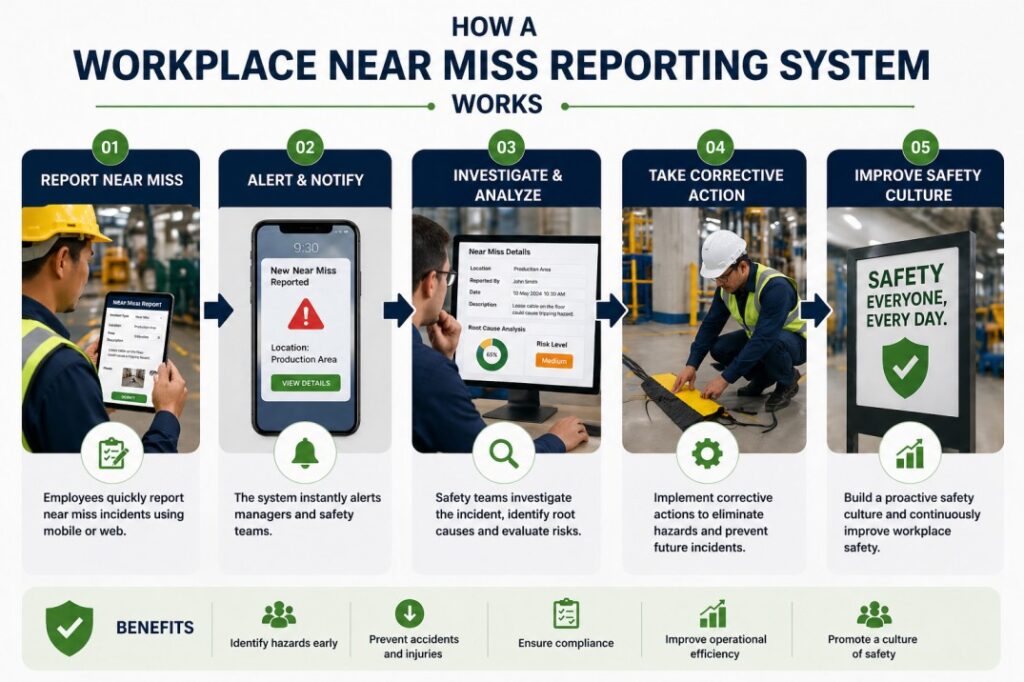
How a Workplace Near Miss Reporting System Works
A workplace near miss reporting system allows employees to quickly report incidents using mobile devices, tablets, or computers. Workers can enter details such as the location, type of incident, potential hazards, and supporting evidence like photos.
Once submitted, the system automatically notifies supervisors or safety teams. They can review the incident, investigate the root cause, and assign corrective actions immediately. This helps businesses respond faster and reduce recurring safety issues.
Key Features of a Workplace Near Miss Reporting System
Modern reporting systems offer real-time notifications that alert teams as soon as incidents are reported. This ensures faster response times. Many platforms also include dashboards that help organizations track recurring hazards and monitor safety trends.
Investigation tools help identify root causes instead of simply documenting incidents. Some systems also allow users to upload photos, documents, and inspection records for better tracking. These features help organizations create a more structured and proactive safety process.
Major Benefits for Businesses
The biggest advantage is preventing workplace accidents before they happen. Identifying hazards early helps companies protect employees and reduce injuries. Organizations also save time by replacing manual paperwork with automated workflows. Lower accident rates often lead to reduced insurance costs, less downtime, and fewer equipment repairs.
Digital reporting systems also help businesses stay compliant with workplace safety regulations by maintaining proper documentation.
Industries Using Workplace Near Miss Reporting Systems
Manufacturing companies: use these systems to reduce machine-related risks, identify equipment failures, improve lockout/tagout compliance, and maintain safer shop floor operations. It helps prevent production downtime caused by avoidable incidents.
Construction businesses: rely on these systems to manage fall hazards, scaffolding risks, electrical issues, and heavy equipment incidents. Real-time reporting helps supervisors resolve unsafe conditions quickly.
Oil and gas companies: use these systems to identify gas leaks, fire hazards, operational risks, and equipment failures before they lead to serious workplace accidents.
Healthcare organizations: use reporting systems to track patient safety incidents, workplace injuries, medical equipment failures, and employee exposure risks.
Warehousing businesses: benefit by monitoring forklift accidents, loading dock hazards, storage risks, slips and falls, and transportation-related incidents.
Mining companies: use these systems to report underground hazards, heavy equipment risks, falling objects, and worker fatigue concerns in high-risk environments.
Chemical industries: rely on these systems to monitor hazardous material handling, chemical leaks, storage issues, and employee exposure risks.
Transportation and logistics companies: use these systems to track vehicle incidents, driver safety concerns, loading errors, and operational risks.
Energy and utility companies: use them to identify electrical hazards, maintenance issues, field worker risks, and equipment failures.
Food manufacturing companies: use these systems to report machine hazards, hygiene risks, operational issues, and employee injuries.
Final Thoughts
Small incidents should never be ignored because they often reveal larger workplace risks. Businesses that take proactive action can prevent major accidents and create safer work environments.
A workplace near miss reporting system helps organizations improve reporting, act faster, and build stronger workplace safety programs for long-term success.