The oil and gas industry continues to operate in high-risk environments where safety failures can lead to serious injuries, environmental damage, and financial loss. In 2026, companies face increasing pressure from regulators, investors, and stakeholders to strengthen safety systems and improve compliance. Traditional safety methods are no longer enough. Organizations now depend on digital tools like oil gas EHS software to manage risks, monitor compliance, and prevent incidents across complex operations.
Let’s explore the major safety challenges shaping the industry in 2026.
Managing High-Risk Operations with Oil Gas EHS Software
Oil and gas operations involve drilling, refining, confined space entry, hot work, and heavy lifting. Offshore facilities operating in the North Sea and desert installations in the Middle East face extreme environmental conditions. These risks make real-time monitoring essential.
In 2026, companies struggle with:
Controlling simultaneous operations
Managing permit-to-work systems
Tracking isolation and LOTO procedures
Monitoring safety-critical tasks
Oil gas EHS software digitizes permits, automates approvals, and provides live dashboards. Supervisors can monitor multiple work activities in real time, reducing the chance of oversight.
Regulatory Compliance Challenges in the Oil and Gas Industry
Regulatory bodies such as the Occupational Safety and Health Administration and the International Association of Oil & Gas Producers regularly update safety and environmental standards.
In 2026, compliance challenges include:
Managing multi-country regulations
Maintaining audit-ready documentation
Tracking corrective and preventive actions
Meeting reporting deadlines
Manual systems increase the risk of missing critical updates. Oil and gas EHS software solutions centralize compliance records, automate alerts, and generate instant reports for audits.
This reduces compliance gaps and improves transparency
Process Safety and Major Accident Prevention Using Oil Gas EHS Software
Process safety failures can lead to catastrophic consequences. Events like the Deepwater Horizon oil spill highlight the importance of strict process safety controls.
In 2026, companies must focus on:
Monitoring safety-critical equipment
Managing change (MOC) effectively
Tracking leading and lagging indicators
Performing structured root cause analysis
Advanced oil gas EHS software integrates process safety management modules that provide predictive insights. AI-based analytics help identify patterns that could indicate equipment failure or unsafe trends.This proactive approach reduces major accident risks.
Workforce Fatigue and Contractor Risk Management
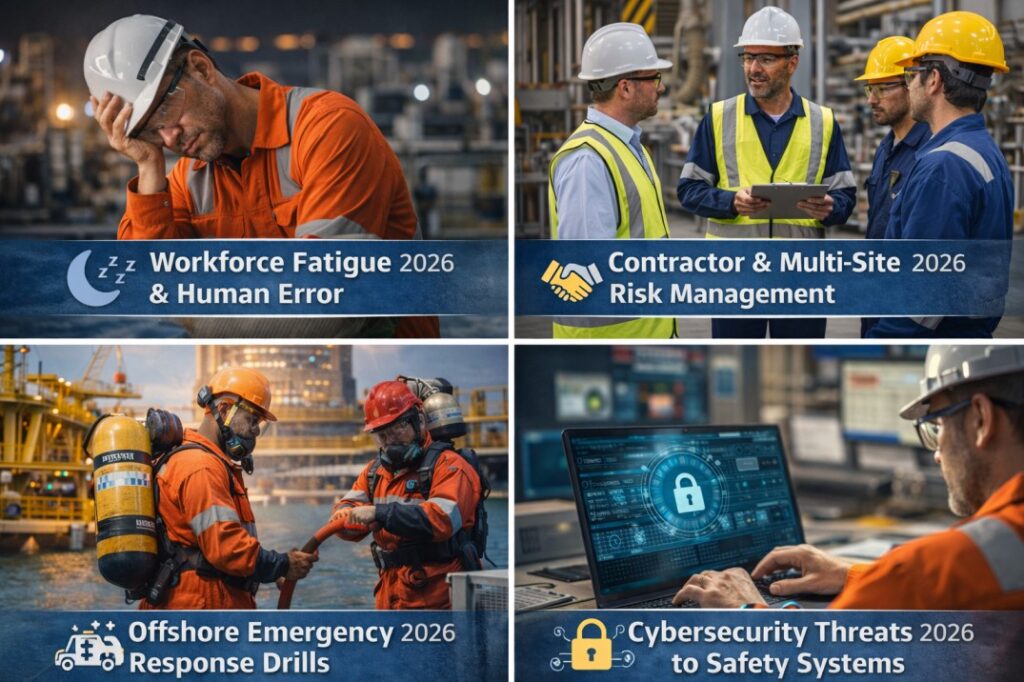
Oil and gas operations often run 24/7. Long shifts and remote work locations increase fatigue-related risks. Human error remains one of the leading causes of incidents.
Key workforce challenges include:
Monitoring working hours
Tracking certifications and training
Managing contractor safety performance
Improving safety culture engagement
Oil and gas EHS software solutions help track employee competency, schedule refresher training, and enable instant near-miss reporting through mobile applications.
Encouraging real-time reporting builds a proactive safety culture.
Environmental and ESG Reporting with Oil Gas EHS Software
Environmental protection is now a strategic priority. Operations in sensitive areas such as the Gulf of Mexico face intense scrutiny.
In 2026, companies must manage:
Greenhouse gas emissions
Oil spill prevention
Waste management compliance
ESG reporting requirements
Oil gas EHS software includes environmental management modules that track emissions data, automate sustainability reports, and trigger alerts when thresholds are exceeded. This ensures compliance while supporting corporate sustainability goals.
6. Contractor and Multi-Site Risk Management
Large oil and gas projects involve multiple contractors working simultaneously.
Challenges include:
Inconsistent safety standards
Incomplete documentation
Communication gaps
Delayed incident reporting
Oil and gas EHS software solutions centralize contractor onboarding, document verification, and performance tracking. Management gains complete visibility across all sites.
Why Digital EHS is Essential in 2026
In 2026, safety management is no longer reactive. Companies must adopt proactive systems that:
Provide real-time data
Improve decision-making
Ensure compliance
Reduce incident rates
Strengthen operational efficiency
For organizations looking to modernize safety management, implementing oil gas EHS software is not just a technology upgrade — it is a strategic investment in long-term operational excellence.